Pay for Top 14 NCAA Executives Totaled Nearly $6-Million Last Year
By Libby Sander
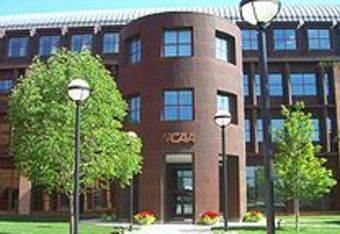
As athletic departments struggled to weather the recession last year, the National Collegiate Athletic Association spent nearly $6-million to compensate 14 of its highest-ranking executives, according to federal tax documents recently made public.
The highest-paid of those officials was Myles Brand, the former NCAA president who died of cancer last September while still in office.
Mr. Brand received $1,145,880 in total compensation for the fiscal year ending August 2009. The sum included $770,739 in salary and more than $200,000 in bonuses and incentive compensation, as well as other pay and benefits.
Mr. Brand took home $1,710,095 in total compensation in 2007-8, including $815,000 in retirement pay that was deferred from previous years.
Other highly paid executives last year were Thomas W. Jernstedt, the former executive vice president who announced his departure last month after 38 years at the association ($604,679); Bernard W. Franklin, executive vice president for membership and student-athlete affairs ($509,429); and James L. Isch, the former chief financial officer and NCAA interim president who was recently named its chief operating officer ($467,734).
The $6-million set aside in 2008-9 for executive compensation is just under 12 percent of the nearly $50-million the association spent on compensation for all of its employees last year, the records show. The organization, headquartered in Indianapolis, employs more than 400 people.
By comparison, the American Council on Education paid its president, Molly Corbett Broad, roughly $507,000 in total compensation last year, while most of its key employees earned between $200,000 and $300,000.
Next month Mark A. Emmert, the departing president of the University of Washington, will take over as the NCAA's next chief executive. It is not known how much the association will pay Mr. Emmert, whose compensation at Washington last year exceeded $900,000.
In all, the NCAA brought in more than $700-million in revenue last year, up from nearly $660-million the previous year. The bulk of that money—just under $590-million—came from television-rights fees. The NCAA's television contract at the time, which it replaced in April with a more-lucrative agreement, was backloaded to provide the association with greater payouts in the final years of the deal.
Other sources of income for the NCAA included championships and ticket sales (more than $75-million), membership fees (about $12-million), and rights and royalties (just below $8-million).
Much of the NCAA's money is doled out to its 1,200 member institutions and athletic conferences in the form of grants and scholarships. But those contributions vary greatly: Last year, for instance, the NCAA shared $32-million with the Big Ten Conference, in Division I-A; $4-million with the Sun Belt Conference, in Division I-AA; and $72,000 with the Old Dominion Athletic Conference, in Division III.
As a nonprofit organization, the NCAA is not required to pay taxes on its income. That has rankled some critics of spending in college sports, including a few members of Congress, who have asked the association to justify its tax-exempt status.
Monday, December 27, 2010

Still-Corrupt NCAA Sanctions Ohio State
It’s cold. The roads are busy. Store lines are long. It’s late December. And the NCAA is corrupt.
In case you didn’t already know it, the NCAA really likes to contradict itself.
Today, they sanctioned five Ohio State football players for receiving improper benefits:
Pryor has to repay $2,500 for selling his 2008 Big Ten championship ring, a 2009 Fiesta Bowl sportsmanship award and his 2008 Gold Pants, a gift from Ohio State. Adams, Herron, Posey, and Thomas are all required to pay lesser amounts for similar violations.
So they can’t sell stuff that was given to them? And how exactly are they supposed to pay back that much money? By receiving more improper benefits? But that’s not the real issue here. It’s that these guys are all allowed to play in the Sugar Bowl against Arkansas—a game with a $17 million payout for each team and countless sponsorship dollars for the NCAA.
Technically, the players are eligible for the bowl game because the NCAA “determined they did not receive adequate rules education during the time period the violations occurred.”
Education? Really? Then what the hell were the six full-time compliance officers employed by Ohio State doing?
Despite what the NCAA says, it comes down to the money—like it always does. If Pryor doesn’t play, ratings drop and sponsors get mad. If the NCAA could find a way to let Ohio State’s starting quarterback and number-one wide receiver play in one of the highest grossing, most viewed games of the year, yet still punish both of them, they were going to. Spineless.
But at this point, we shouldn’t expect anything less.
In case you didn’t already know it, the NCAA really likes to contradict itself.
Today, they sanctioned five Ohio State football players for receiving improper benefits:
Five players were found to have sold awards, gifts, and university apparel, plus receive improper benefits in 2009. In addition to missing five games next season, [Terrelle] Pryor, Mike Adams, Daniel Herron, Devier Posey, and Solomon Thomas must repay money and benefits ranging in value from $1,000 to $2,500. The repayments must be made to a charity.This comes on the heels of a report that several players—including Pryor, the team’s star quarterback—traded autographs for free tattoos. Pryor denied that allegation on his Twitter account.
Pryor has to repay $2,500 for selling his 2008 Big Ten championship ring, a 2009 Fiesta Bowl sportsmanship award and his 2008 Gold Pants, a gift from Ohio State. Adams, Herron, Posey, and Thomas are all required to pay lesser amounts for similar violations.
So they can’t sell stuff that was given to them? And how exactly are they supposed to pay back that much money? By receiving more improper benefits? But that’s not the real issue here. It’s that these guys are all allowed to play in the Sugar Bowl against Arkansas—a game with a $17 million payout for each team and countless sponsorship dollars for the NCAA.
Technically, the players are eligible for the bowl game because the NCAA “determined they did not receive adequate rules education during the time period the violations occurred.”
Education? Really? Then what the hell were the six full-time compliance officers employed by Ohio State doing?
Despite what the NCAA says, it comes down to the money—like it always does. If Pryor doesn’t play, ratings drop and sponsors get mad. If the NCAA could find a way to let Ohio State’s starting quarterback and number-one wide receiver play in one of the highest grossing, most viewed games of the year, yet still punish both of them, they were going to. Spineless.
But at this point, we shouldn’t expect anything less.
Dez Bryant reacts to Ohio State suspensions: 'NCAA is crazy'
Dallas Cowboys wide receiver Dez Bryant has moved on to the NFL, but his anger with the NCAA remains in light of the penalties assessed to Terrelle Pryor and four other Ohio State players.
 The quintet of Buckeyes are suspended five games for selling awards and receiving improper benefits.
Bryant felt the wrath of the NCAA after a 12-game suspension effectively ended his college career at Oklahoma State. The penalty stemmed from him lying about a visit to the home of Deion Sanders even though it was not a rules violation.
He posted on his Twitter account: "I guess I should have got into a lot of trouble in college ... maybe I would have gotten less punishment? lol"
Since Bryant's punishment, several players have seen significantly less sanctions for rules violations, associating with agents and for not being truthful with the NCAA.
He added on his Twitter: "I lied and then came back and told the truth....I didn't take no money, was not communicating with no agents at all.. NCAA is crazy"
After leaving early for the NFL draft, Bryant was taken in the first round by the Dallas Cowboys and had 45 catches for 561 yards and six touchdowns in 12 games before suffering a season-ending broken ankle earlier this month.
"At the end of the day I was happy as hell ... Because it's a privilege to wear that star on your helmet," he tweeted.
-- Erick Smith

By Brody Schmidt, AP
Bryant felt the wrath of the NCAA after a 12-game suspension effectively ended his college career at Oklahoma State. The penalty stemmed from him lying about a visit to the home of Deion Sanders even though it was not a rules violation.
He posted on his Twitter account: "I guess I should have got into a lot of trouble in college ... maybe I would have gotten less punishment? lol"
Since Bryant's punishment, several players have seen significantly less sanctions for rules violations, associating with agents and for not being truthful with the NCAA.
He added on his Twitter: "I lied and then came back and told the truth....I didn't take no money, was not communicating with no agents at all.. NCAA is crazy"
After leaving early for the NFL draft, Bryant was taken in the first round by the Dallas Cowboys and had 45 catches for 561 yards and six touchdowns in 12 games before suffering a season-ending broken ankle earlier this month.
"At the end of the day I was happy as hell ... Because it's a privilege to wear that star on your helmet," he tweeted.
-- Erick Smith
USC football: NCAA appeal hearing set for Jan. 22, Pat Haden says
December 23, 2010 | 2:35 pm
USC's hearing before the NCAA's Infractions Appeals Committee will take place Jan. 22 in Indianapolis, Athletic Director Pat Haden said Thursday.
USC is appealing sanctions handed down last summer that included a two-year bowl ban and the reduction of 30 scholarships over three years. The school was penalized, in part, because Reggie Bush and his parents were found to have accepted prohibited extra benefits from agents and would-be sports marketers. Bush's stepfather also helped set up a fledgling sports marketing venture.
Haden; USC President Max Nikias; David Roberts, the school's vice president for athletic compliance; and the university's legal representatives are expected to attend the hearing.
USC's hearing will come approximately four weeks after the second of two controversial NCAA decisions this month.
The NCAA announced Thursday that five of six Ohio State football players who violated preferential-treatment bylaws would be suspended for the first five games of the 2011 season but that all of the players would be allowed to participate in the Jan. 4 Sugar Bowl against Arkansas.
The announcement came three weeks after the NCAA determined that Auburn quarterback Cam Newton was eligible despite the fact that his father broke NCAA rules for his role in a pay-for-play scenario when his son was being recruited from a junior college. Cam Newton later won the Heisman Trophy and will lead Auburn against Oregon in the Bowl Championship Series title game on Jan. 10.
Haden said after the Newton ruling that it was at odds with how USC's beefed-up compliance department was trying to educate athletes and their parents regarding NCAA rules. He also said that school attorneys probably would review the case.
Haden said he did not know enough about the Ohio State situation to comment.
"I'm just worried about us," he said. "It's a just reminder of the constant vigilance you must have."
-- Gary Klein
USC is appealing sanctions handed down last summer that included a two-year bowl ban and the reduction of 30 scholarships over three years. The school was penalized, in part, because Reggie Bush and his parents were found to have accepted prohibited extra benefits from agents and would-be sports marketers. Bush's stepfather also helped set up a fledgling sports marketing venture.
Haden; USC President Max Nikias; David Roberts, the school's vice president for athletic compliance; and the university's legal representatives are expected to attend the hearing.
USC's hearing will come approximately four weeks after the second of two controversial NCAA decisions this month.
The NCAA announced Thursday that five of six Ohio State football players who violated preferential-treatment bylaws would be suspended for the first five games of the 2011 season but that all of the players would be allowed to participate in the Jan. 4 Sugar Bowl against Arkansas.
The announcement came three weeks after the NCAA determined that Auburn quarterback Cam Newton was eligible despite the fact that his father broke NCAA rules for his role in a pay-for-play scenario when his son was being recruited from a junior college. Cam Newton later won the Heisman Trophy and will lead Auburn against Oregon in the Bowl Championship Series title game on Jan. 10.
Haden said after the Newton ruling that it was at odds with how USC's beefed-up compliance department was trying to educate athletes and their parents regarding NCAA rules. He also said that school attorneys probably would review the case.
Haden said he did not know enough about the Ohio State situation to comment.
"I'm just worried about us," he said. "It's a just reminder of the constant vigilance you must have."
-- Gary Klein
Tuesday, December 21, 2010
N.C.A.A. Sued Over One-Year Scholarships
A former Rice University football player who lost his scholarship for his senior year has filed a class-action lawsuit against the N.C.A.A., arguing that the one-year limit on athletic scholarships amounts to a price-fixing scheme between the association and member universities.
The lawsuit was filed Monday in United States District Court in San Francisco by the former player, Joseph Agnew. It came five months after the N.C.A.A. acknowledged that the antitrust division of the Justice Department was looking into the one-year scholarship rule.
“People look at the N.C.A.A. as kind of outside these laws, but they’re really not,” said Steve Berman, one of Agnew’s lawyers. “Here, they have entered into an agreement restraining the length of a scholarship that kids can get, and we think that’s anticompetitive and is harmful to student-athletes.”
Agnew was a highly recruited defensive back from Carroll, Tex., who enrolled at Rice in 2006 on a full scholarship, according to a copy of the complaint provided by Agnew’s lawyers.
Agnew played in all 13 of the team’s games his first season, but the head coach who recruited him, Todd Graham, left for the University of Tulsa before Agnew’s sophomore year. After losing playing time and battling injuries, Agnew was not offered a scholarship in his junior year. He appealed the decision and won, but he was denied a scholarship the next year. Agnew, who is pursuing a degree in sociology, is now required to pay his own tuition.
“He was a star athlete, and we believe that if the rule hadn’t been in place, he would have gotten multiple offers of full scholarships,” said Berman, who also represents Sam Keller, the former Arizona State and Nebraska quarterback who is suing the N.C.A.A. and EA Sports in a class-action lawsuit arguing that the use of college athletes’ likenesses in video games is illegal.
Bob Williams, a spokesman for the N.C.A.A., said in a statement that the N.C.A.A. was reviewing the lawsuit, but “it should be noted that the award of athletic scholarships on a one-year, renewable basis is the more typical approach taken within higher education for talent-based and academic scholarships in general.”
In May, responding to reports that the Justice Department was investigating its scholarship rule, the N.C.A.A. released a statement explaining that “an annual review of whether an individual meets the standards of a merit award is the most appropriate way to ensure that the most deserving student-athletes receive that award each year.”
A spokeswoman for the Justice Department declined to comment on the reported inquiry.
The lawsuit, which refers to the scholarships as tuition “discounts,” describes the rule as a “blatant price-fixing agreement” and says they are not necessary to protect the amateur status of N.C.A.A. athletes.
“By unlawfully agreeing not to offer multiyear athletics-based discounts,” the lawsuit argues, “the N.C.A.A. and its member institutions have ensured that student-athletes who are injured or who simply do not meet the school’s expectations can be cut from a team and their scholarships terminated.”
The suit argues that the N.C.A.A. is also violating antitrust rules by limiting the number of scholarships that each team can award.
Ref: The New York Times
The lawsuit was filed Monday in United States District Court in San Francisco by the former player, Joseph Agnew. It came five months after the N.C.A.A. acknowledged that the antitrust division of the Justice Department was looking into the one-year scholarship rule.
“People look at the N.C.A.A. as kind of outside these laws, but they’re really not,” said Steve Berman, one of Agnew’s lawyers. “Here, they have entered into an agreement restraining the length of a scholarship that kids can get, and we think that’s anticompetitive and is harmful to student-athletes.”
Agnew was a highly recruited defensive back from Carroll, Tex., who enrolled at Rice in 2006 on a full scholarship, according to a copy of the complaint provided by Agnew’s lawyers.
Agnew played in all 13 of the team’s games his first season, but the head coach who recruited him, Todd Graham, left for the University of Tulsa before Agnew’s sophomore year. After losing playing time and battling injuries, Agnew was not offered a scholarship in his junior year. He appealed the decision and won, but he was denied a scholarship the next year. Agnew, who is pursuing a degree in sociology, is now required to pay his own tuition.
“He was a star athlete, and we believe that if the rule hadn’t been in place, he would have gotten multiple offers of full scholarships,” said Berman, who also represents Sam Keller, the former Arizona State and Nebraska quarterback who is suing the N.C.A.A. and EA Sports in a class-action lawsuit arguing that the use of college athletes’ likenesses in video games is illegal.
Bob Williams, a spokesman for the N.C.A.A., said in a statement that the N.C.A.A. was reviewing the lawsuit, but “it should be noted that the award of athletic scholarships on a one-year, renewable basis is the more typical approach taken within higher education for talent-based and academic scholarships in general.”
In May, responding to reports that the Justice Department was investigating its scholarship rule, the N.C.A.A. released a statement explaining that “an annual review of whether an individual meets the standards of a merit award is the most appropriate way to ensure that the most deserving student-athletes receive that award each year.”
A spokeswoman for the Justice Department declined to comment on the reported inquiry.
The lawsuit, which refers to the scholarships as tuition “discounts,” describes the rule as a “blatant price-fixing agreement” and says they are not necessary to protect the amateur status of N.C.A.A. athletes.
“By unlawfully agreeing not to offer multiyear athletics-based discounts,” the lawsuit argues, “the N.C.A.A. and its member institutions have ensured that student-athletes who are injured or who simply do not meet the school’s expectations can be cut from a team and their scholarships terminated.”
The suit argues that the N.C.A.A. is also violating antitrust rules by limiting the number of scholarships that each team can award.
Ref: The New York Times
Monday, December 6, 2010
From the bleacher report
an excellent article on bleacher report
 The NCAA enforcement process is unfair and inconsistent. Three recent cases involving USC’s Reggie Bush, Auburn’s Cameron Newton, and North Carolina’s ineligible athletes show that the NCAA may be corrupt.
The secret but carefully orchestrated one day ineligibility of Auburn quarterback Cam Newton for violation of the recruiting amateurism rules once again demonstrates the corrupt culture of the NCAA.
The NCAA press release made it clear that Newton violated NCAA rule 12.3.3 because his minister father, Cecil Newton, and a scouting representative shopped him for at least $180,000 compensation to a college for an athletic scholarship. So far, there is no proof that money changed hands or that Auburn knew about it according to the NCAA.
But, in the USC case, Reggie Bush was declared ineligible and games were vacated before payments were made or Bush was involved because his step-father allegedly had discussions (based solely on hearsay by a felon who lied in other testimony) with a family friend to represent Bush in the NFL after leaving USC.
So, Newton should have been declared ineligible for all Auburn games this season for the same reason since his violation was committed prior to that time.
Note that the SEC bylaw 14.01.3.2 states:
So, it is difficult to believe Newton now when he says that he didn’t know about his father, but the NCAA rules don’t require that he know to be ineligible. It is also hard to believe that he passes the Heisman “integrity” requirement.
Six North Carolina Tar Heels didn’t play this season due to the NCAA sports agent probe. The NCAA declared defensive end Robert Quinn and receiver Greg Little permanently ineligible, but none of the games they played in after the time they committed violations were vacated, unlike the USC Reggie Bush rulings.
The NCAA mistakes, unprecedented findings and sanctions against the USC Trojans seemed designed to destroy their heralded football program on the slimmest of shoddy evidence. The actions of the enforcement staff and COI (Committee of Infractions) during this time appear to be incompetent and/or dishonest.
It took the NCAA over four years to orchestrate the USC sanctions. It may have taken longer if the NCAA had not been so ridiculed about the delays.
Some members of the COI had obvious conflicts of interests. So how could all the 10 members sign off on the USC sanctions?
A possible explanation surfaced in one fan message board from a reliable source. Apparently, one of the NCAA committee members was very defensive about the USC case when talking to a booster group from the member’s school. This member said that the harshness of the penalties based on the flimsiest of evidence was not the member’s doing.
The reliable source talked to a legal expert who practices in front of the NCAA’s COI, and said this too often happens because the members depend too much on staff. In the USC case, it appears that a couple of people from the NCAA’s enforcement staff and a couple of COI members took the case over, and decided everything before the rest of the committee found out what was happening. The members then could either make a scene and walk out or quit, or go along and hope for the best.
So, it looks like the majority of the 10 committee members may have closed their eyes, and signed off on the document hoping for the best. However, the disparity between what happened to USC and what will surely not happen to any SEC or ACC school in similar situations makes this look like a bad bet.
After ganging up against USC, the news media is beginning to understand how badly the Trojans have been mistreated by the NCAA. Here are several articles about the double standard applied to USC and Auburn’s Cam Newton:
So, here are the likely changes:
Current rule: “12.3.3 Athletics Scholarship Agent. Any individual, agency or organization that represents a prospective student-athlete for compensation in placing the prospect in a collegiate institution as a recipient of institutional financial aid shall be considered an agent or organization marketing the individual's athletics ability or reputation.”
New rule: Same as above since there is nothing to clarify
What more is there to say about the NCAA’s willingness to rationalize and the corrupt culture that it takes to operate this way?
Is the public so passive that they will continue to allow the NCAA to represent our universities this way?
If you are sick and tired of the NCAA nonsense, write your University President and/or Athletic Director.
The secret but carefully orchestrated one day ineligibility of Auburn quarterback Cam Newton for violation of the recruiting amateurism rules once again demonstrates the corrupt culture of the NCAA.
The NCAA press release made it clear that Newton violated NCAA rule 12.3.3 because his minister father, Cecil Newton, and a scouting representative shopped him for at least $180,000 compensation to a college for an athletic scholarship. So far, there is no proof that money changed hands or that Auburn knew about it according to the NCAA.
But, in the USC case, Reggie Bush was declared ineligible and games were vacated before payments were made or Bush was involved because his step-father allegedly had discussions (based solely on hearsay by a felon who lied in other testimony) with a family friend to represent Bush in the NFL after leaving USC.
So, Newton should have been declared ineligible for all Auburn games this season for the same reason since his violation was committed prior to that time.
Note that the SEC bylaw 14.01.3.2 states:
“If at any time before or after matriculation in a member institution a student-athlete or any member of his/her family receives or agrees to receive, directly or indirectly, any aid or assistance beyond or in addition to that permitted by the Bylaws of this Conference (except such aid or assistance as such student-athlete may receive from those persons on whom the student is naturally or legally dependent for support), such student- athlete shall be ineligible for competition in any intercollegiate sport within the Conference for the remainder of his/her college career."This is the same Cam Newton who was thrown out of the University of Florida for his arrest on charges of stealing a laptop and he may have cheated multiple times in class as well: “Report: Cam Newton left Florida after charges of academic cheating.”
So, it is difficult to believe Newton now when he says that he didn’t know about his father, but the NCAA rules don’t require that he know to be ineligible. It is also hard to believe that he passes the Heisman “integrity” requirement.
Six North Carolina Tar Heels didn’t play this season due to the NCAA sports agent probe. The NCAA declared defensive end Robert Quinn and receiver Greg Little permanently ineligible, but none of the games they played in after the time they committed violations were vacated, unlike the USC Reggie Bush rulings.
The NCAA mistakes, unprecedented findings and sanctions against the USC Trojans seemed designed to destroy their heralded football program on the slimmest of shoddy evidence. The actions of the enforcement staff and COI (Committee of Infractions) during this time appear to be incompetent and/or dishonest.
It took the NCAA over four years to orchestrate the USC sanctions. It may have taken longer if the NCAA had not been so ridiculed about the delays.
Some members of the COI had obvious conflicts of interests. So how could all the 10 members sign off on the USC sanctions?
A possible explanation surfaced in one fan message board from a reliable source. Apparently, one of the NCAA committee members was very defensive about the USC case when talking to a booster group from the member’s school. This member said that the harshness of the penalties based on the flimsiest of evidence was not the member’s doing.
The reliable source talked to a legal expert who practices in front of the NCAA’s COI, and said this too often happens because the members depend too much on staff. In the USC case, it appears that a couple of people from the NCAA’s enforcement staff and a couple of COI members took the case over, and decided everything before the rest of the committee found out what was happening. The members then could either make a scene and walk out or quit, or go along and hope for the best.
So, it looks like the majority of the 10 committee members may have closed their eyes, and signed off on the document hoping for the best. However, the disparity between what happened to USC and what will surely not happen to any SEC or ACC school in similar situations makes this look like a bad bet.
After ganging up against USC, the news media is beginning to understand how badly the Trojans have been mistreated by the NCAA. Here are several articles about the double standard applied to USC and Auburn’s Cam Newton:
- Gary Klein, L.A. Times “USC football: Pat Haden surprised by NCAA decision regarding Cam Newton” on December 1, 2010
- Dan Wetzel, Yahoo Sports “NCAA decision on Newton opens Pandora’s box” on December 1, 2010
- Staff, CollegeFootballNews.Com “CFN Analysis – the Cam Newton Ruling” on December 1, 2010
- Sports by Brooks, “If the NCAA is Right, Cecil Lied and SEC Cheated” on December 2, 2010
- Bill Dwyer, L.A. Times, “Little Reggie, Little Cam and the NCAA” on December 2, 2010
- Associated Press, “John Swofford [ACC commissioner] criticizes NCAA ruling” on December 3, 2010
So, here are the likely changes:
Current rule: “12.3.3 Athletics Scholarship Agent. Any individual, agency or organization that represents a prospective student-athlete for compensation in placing the prospect in a collegiate institution as a recipient of institutional financial aid shall be considered an agent or organization marketing the individual's athletics ability or reputation.”
New rule: Same as above since there is nothing to clarify
What more is there to say about the NCAA’s willingness to rationalize and the corrupt culture that it takes to operate this way?
Is the public so passive that they will continue to allow the NCAA to represent our universities this way?
If you are sick and tired of the NCAA nonsense, write your University President and/or Athletic Director.
Subscribe to:
Posts (Atom)